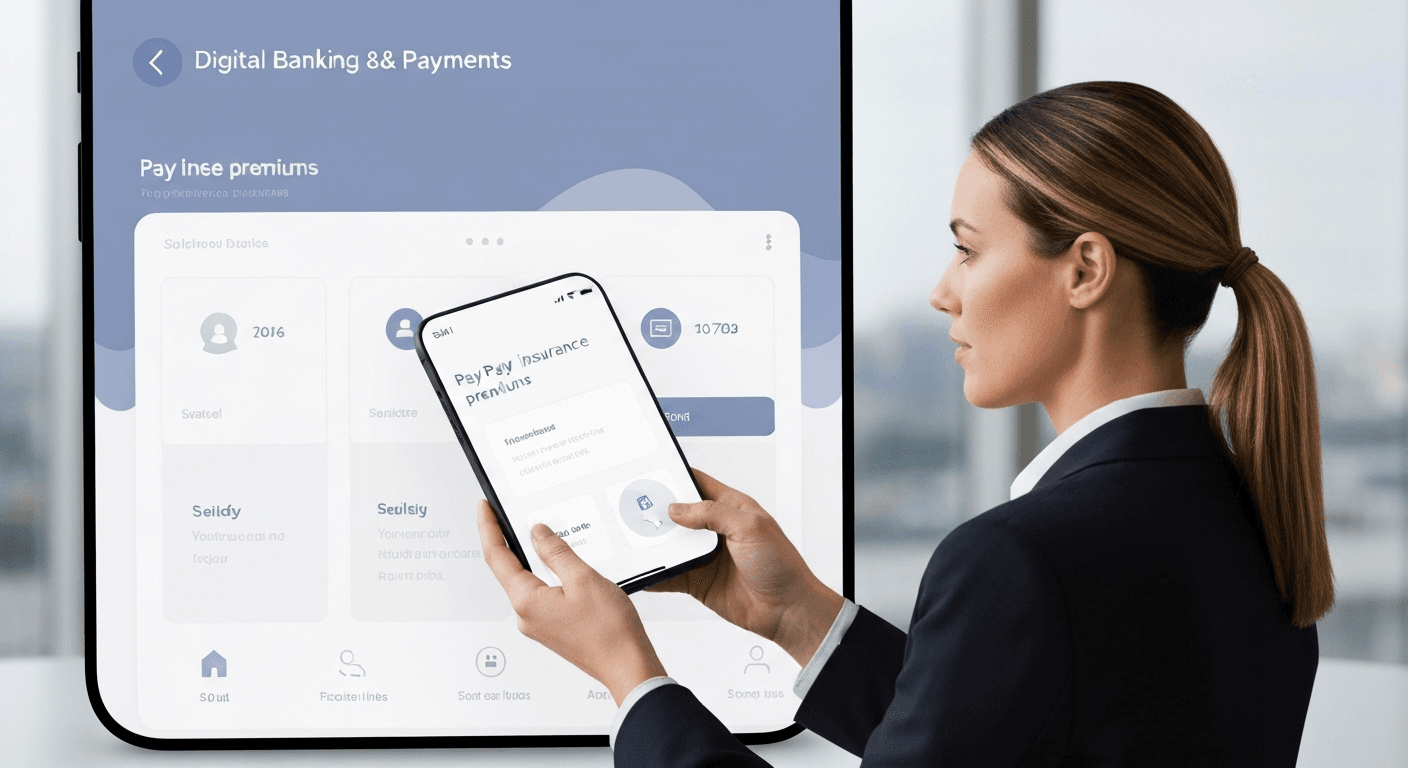
Aon, the $60 billion global insurance brokerage, has announced that stablecoin payments now accelerate premium settlement from an industry-standard 3-14 days down to minutes. The program, built on partnerships with Coinbase Commerce and Paxos, represents the first major deployment of blockchain-based payment rails in the commercial insurance sector — an industry that moves $7.1 trillion in annual premiums through infrastructure largely unchanged since the 1990s.
The announcement validates stablecoins' transition from speculative crypto assets to practical corporate treasury instruments. For CFOs managing insurance costs across multiple jurisdictions, the operational benefits are immediate and measurable.
How the System Works
Aon's stablecoin premium payment flow:
- Policy issuance: Aon generates a premium invoice denominated in USD (as normal)
- Payment selection: The insured chooses stablecoin payment at checkout (USDC or PYUSD)
- Settlement: Funds transmit via on-chain transfer to Aon's custodial wallet (Coinbase Prime)
- Conversion: Automatic conversion to USD via Paxos rails within 60 seconds of receipt
- Confirmation: Insured receives proof-of-payment instantly; Aon credits the policy immediately
The critical design decision: Aon never holds stablecoin exposure on its balance sheet. The instant conversion means the company's accounting treatment remains identical to receiving a wire transfer — eliminating the need for digital asset accounting complexity on Aon's side while giving payers the speed benefits.
Settlement time comparison:
- Traditional wire (domestic): 1-2 business days
- Traditional wire (cross-border): 3-14 business days
- ACH: 2-3 business days
- Stablecoin: 2-15 minutes (including conversion)
The Cross-Border Premium Problem
The insurance industry's payment infrastructure is particularly antiquated for international transactions. A multinational company purchasing coverage across 30 countries faces:
Correspondent banking chains. Premium payments from Singapore to a London-based Lloyd's syndicate traverse 3-4 intermediary banks, each adding time, fees, and opacity. A $5 million premium payment can lose $50,000-$150,000 to intermediary fees and FX spreads along the way.
Settlement uncertainty. Without real-time tracking, treasury teams can't confirm when premiums are received. This creates coverage gap risk: if a loss occurs during the settlement window, disputes arise over whether payment was "made" at initiation or receipt.
Regulatory holding periods. Some jurisdictions require premiums to be held in trust accounts for regulatory periods before disbursement to underwriters. The existing system can't distinguish between "payment in transit" and "payment received but held" — creating reconciliation nightmares for global insurance programs.
Currency conversion timing. Premiums quoted in GBP but paid from USD accounts face FX execution risk during multi-day settlement windows. A 2% currency move on a $10 million premium equals $200,000 in unexpected cost.
Stablecoins solve each of these problems by design: instant settlement eliminates correspondent chains, on-chain visibility provides real-time payment tracking, and dollar-denominated stablecoins eliminate FX risk for USD-priced policies.
Accounting and Compliance Considerations
For companies paying premiums via stablecoin, several accounting considerations emerge:
Fair value measurement. Under ASU 2023-08, stablecoins are measured at fair value with changes in income. However, for major stablecoins maintaining their $1.00 peg, the practical impact is negligible — typically less than $0.001 variance per token.
Transaction documentation. Companies must maintain records linking blockchain transactions to specific policy payments. The on-chain transaction hash provides an immutable audit trail superior to traditional bank references — but accounting systems must be configured to capture this data.
Insurance regulatory compliance. State insurance regulations typically specify acceptable payment methods. Most jurisdictions accept "electronic funds transfer" broadly, but some may require explicit approval for blockchain-based payments. Companies should confirm regulatory acceptance before implementing.
Internal control implications. Stablecoin payments require new control procedures: wallet access management, multi-signature approval for large transactions, and reconciliation between blockchain records and general ledger entries. Audit committees should approve the control framework before adoption.
Why This Matters
For CFOs managing global insurance programs: Cross-border premium payments currently cost 1-3% in fees and create 3-14 days of settlement uncertainty. Stablecoin payment reduces both to near-zero. For a company paying $50 million in annual international premiums, the savings equal $500,000-$1.5 million annually plus elimination of FX timing risk.
For treasury teams: Stablecoin payments integrate with existing treasury management by converting instantly to USD. No crypto exposure, no wallet management complexity — just faster, cheaper settlement of obligations that were already denominated in dollars.
For insurance brokers and agents: Aon's first-mover advantage creates competitive pressure. Brokers that enable stablecoin payment may win clients seeking operational efficiency — particularly mid-market companies with significant international operations and cost-sensitive finance teams.
For accounting firms: Clients adopting stablecoin insurance payments need advisory guidance on control frameworks, documentation requirements, and regulatory compliance. This represents a high-value advisory engagement at the intersection of insurance, digital assets, and internal controls.
For the broader B2B payments market: Insurance premiums are just the beginning. Any large-value B2B payment that currently suffers from cross-border friction — trade finance, supply chain payments, intercompany transfers — could follow the same model. Aon's validation reduces adoption risk for other industries.
The key takeaway: Aon's stablecoin premium payment program proves that blockchain rails work for real corporate transactions at scale — and any CFO paying $5M+ in cross-border insurance premiums annually should evaluate stablecoin settlement as a cost reduction and risk elimination tool immediately.
Frequently Asked Questions
How is Aon using stablecoins for insurance payments?
What are the accounting implications of paying insurance premiums in stablecoins?
Why would a company pay insurance premiums with stablecoins instead of wire transfers?
Fintech.News Desk
Editorial TeamThe Fintech.News Desk covers the latest developments in fintech, accounting technology, tax regulation, and AI in finance. We combine AI-assisted research with editorial review to deliver analytical news coverage for finance professionals.
Enjoyed this article?
Get stories like this first on our Telegram channel. Subscribed by thousands of fintech leaders.
Join us on TelegramRead Next
Embedded Payments Make Fraud Harder to See and Faster to Hit
Embedded payments hide fraud in plain sight. Learn how seamless integration impacts fraud detection & speed in fintech. Stay ahead of risks.

Inflation Hits 58% of Small Businesses and Pushes Embedded B2B Finance Forward
Inflation hurting SMBs? See how embedded B2B finance offers a lifeline. Discover solutions & strategies for accounting/fintech pros.

Fed Finds Stablecoins Idle, Confirms PYMNTS Usage Gap
Fed report reveals stablecoins mostly idle, used within crypto, not mainstream payments. PYMNTS usage gap confirmed. Fintech/accounting insights here.

68% of Banks Increase Fraud Defense Spending as Account Takeovers Spike
Banks boost fraud defense! 68% increase spending amid account takeover surge. Stay ahead of fintech security trends & protect your institution now.

BILL Expands Supplier Payments Plus Solution
Automate enterprise AP with BILL's Supplier Payments Plus. Enhanced features streamline supplier payments for large enterprises & SMBs. Learn more.

Visa Wants Fraudsters to Pick Another Business
Visa combats evolving fraud with AI. Deep dive into their strategy against sophisticated cybercrime. Insights for fintech & accounting pros.
More in this topic

HSBC Extends Tokenized Deposit Service to US Firms

Fed Rule Changes Would Expand SMB Lending Capacity
Trulioo Pushes Back Beyond One-Time Identity Checks

42% of CFOs Express Interest in Stablecoins as Payments Use Cases Grow

Gig Workers Want Real-Time Pay for Real-Time Work